
Minimum Coverage vs Full Coverage — Florida
Free to compare
The Two-Car Decision That Breaks the Minimum Coverage Model
You own two vehicles. One is financed; the lender requires comprehensive and collision. The other is paid off, and you're weighing whether to carry only Florida's minimum: $10,000 property damage liability and personal injury protection.
Florida's minimum liability structure is unusual. The state does not require bodily injury liability for in-state drivers who meet financial responsibility another way. You must carry $10,000 property damage liability and PIP, but no coverage for injuries you cause to someone else unless you've had a prior violation or lapse. That gap becomes a household-level risk when you're managing multiple vehicles, multiple drivers, and the possibility that one accident involves both cars or exceeds the $10,000 property damage cap by a wide margin.
“A $10,000 property damage cap does not cover a total loss on most vehicles built after 2015.”

Compare Florida Car Insurance Quotes Today
Get My Florida Car Insurance Quote$10,000
Florida Property Damage Minimum
Florida requires $10,000 property damage liability but does not mandate bodily injury liability for most drivers. That $10,000 cap is per accident, not per vehicle—meaning a collision that damages two parked cars or totals one newer vehicle can exceed your coverage in seconds.
Florida Department of Highway Safety and Motor Vehicles
What Minimum Coverage Actually Covers Across Two Vehicles
Minimum coverage in Florida means $10,000 property damage liability and PIP. Property damage liability pays for damage your vehicle causes to someone else's car, fence, or building. PIP pays your own medical bills and lost wages up to the policy limit, regardless of fault. Neither pays for damage to your own vehicle. Neither pays for injuries you cause to another person.
When you carry minimum coverage on both vehicles, each policy covers that specific car's liability exposure. If the other driver was injured and you carry no bodily injury liability, you pay their medical bills, lost income, and legal costs yourself. The financed vehicle sitting in your garage does not help—the collision policy on that car covers only that car's physical damage, not liability from the other vehicle.
The structural problem: Florida's minimum was designed for single-car households with older vehicles and tight budgets. It assumes the driver can absorb a gap. A household with two vehicles, one financed and one not, typically cannot. The equity in the paid-off car and the loan balance on the financed car together represent tens of thousands of dollars at risk if the minimum-coverage vehicle causes an accident that exceeds $10,000 property damage or involves injury.
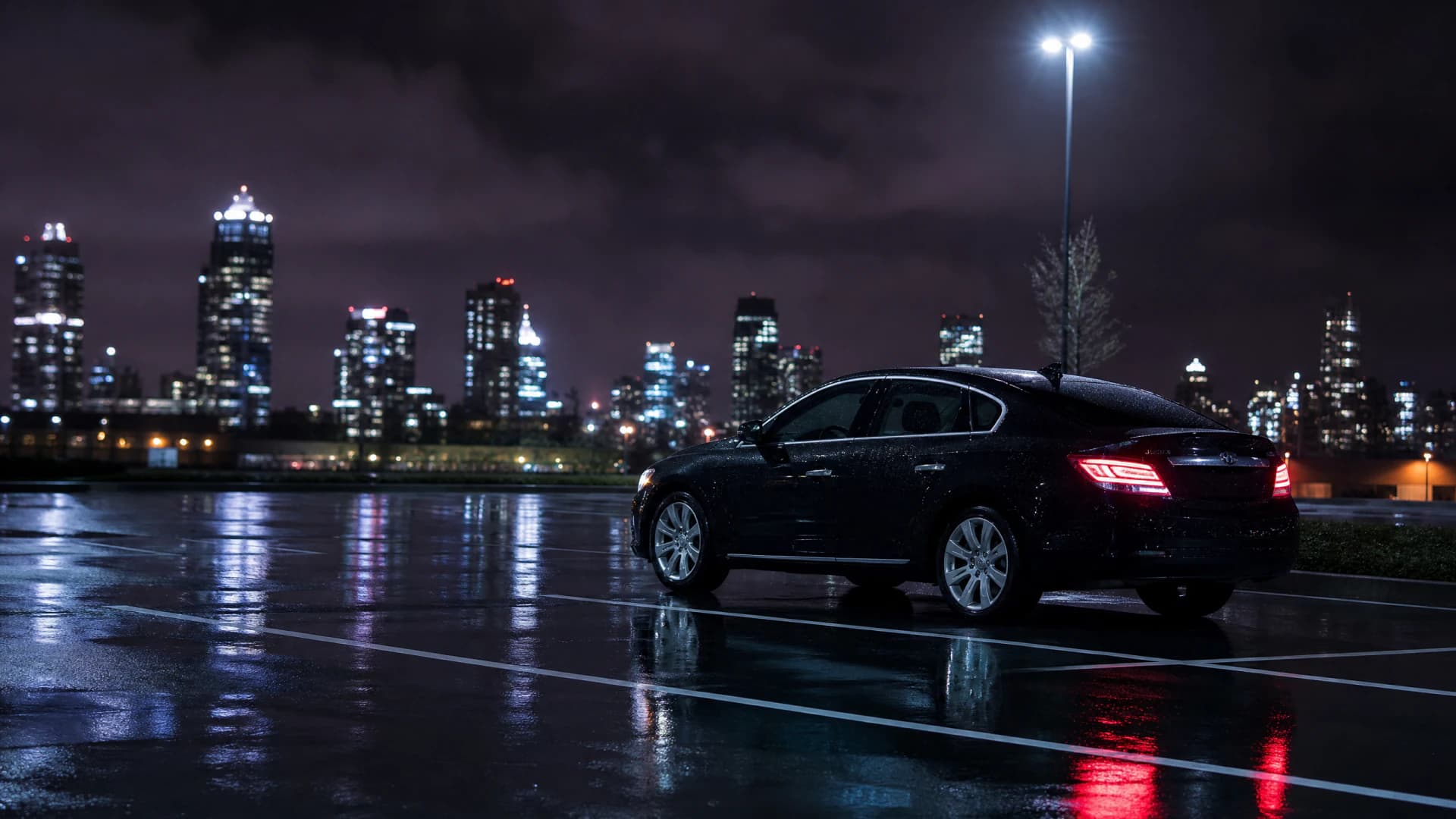
A $10,000 property damage cap does not cover a total loss on most vehicles built after 2015. One accident with your minimum-coverage car can put both vehicles' equity at risk.
Related Articles







The Lender Requirement and the Paid-Off Vehicle
If one vehicle in your household is financed or leased, the lender requires comprehensive and collision on that car. You cannot carry minimum coverage on a financed vehicle. The lender's interest is noted on the policy, and the collision coverage protects the loan balance. That vehicle carries full coverage whether you want it or not.
The paid-off vehicle is your decision. You can carry minimum coverage, full coverage, or liability-only (property damage and bodily injury without comprehensive or collision). Liability-only is common for older paid-off cars with low actual cash value. The question is whether the paid-off vehicle's value justifies paying for collision and comprehensive, and whether your household can absorb the loss if that car is totaled and you receive nothing.
The household-level risk: if the paid-off vehicle causes an accident that exceeds your liability limits, the other party can pursue your assets—including the equity in the financed vehicle. Florida allows judgment creditors to place liens on vehicles titled in your name. Minimum coverage on the paid-off car creates liability exposure that can reach the financed car's equity if the accident is severe. Full coverage on the paid-off car does not prevent that liability exposure, but higher liability limits do.
20.6%
Florida Uninsured Motorist Rate
One in five Florida drivers carries no insurance. If an uninsured driver totals your paid-off vehicle and you carry only minimum coverage, you receive nothing—minimum coverage includes no collision or uninsured motorist property damage. Your car is a total loss and you pay to replace it.
Insurance Research Council, 2023

When Minimum Coverage Works and When It Fails
It works when your household assets are modest and a judgment creditor would recover little. It works when you are willing to accept the risk that one accident could cost you both vehicles' value plus your savings if the damage or injury exceeds $10,000.
Minimum coverage fails when one vehicle is financed, when either vehicle is worth more than $10,000, when your household has equity or savings a judgment creditor could reach, or when you cannot replace the paid-off vehicle if it is totaled by an uninsured driver. It fails when your teenager or a household member with a recent ticket drives the minimum-coverage car, because the likelihood of an at-fault accident is higher and the liability exposure is the same. It fails when you are comparing the cost of minimum coverage on one car against the cost of raising liability limits on both—because the incremental cost of higher liability is often smaller than the gap-risk you are accepting.
Structuring Coverage Across Two Vehicles
Most Florida households with two vehicles structure coverage one of three ways. First: full coverage on both vehicles, with matching liability limits. This is the highest-cost option and the lowest-risk. Both cars are protected against total loss, and liability limits are high enough to cover most accidents without exposing household assets. Second: full coverage on the financed vehicle, liability-only on the paid-off vehicle, with higher liability limits than minimum on both policies. This balances cost and risk—you pay for collision and comprehensive only on the car the lender requires it, but you carry enough liability to protect both vehicles' equity. Third: full coverage on the financed vehicle, minimum coverage on the paid-off vehicle. This is the lowest-cost option and the highest-risk. You are self-insuring the paid-off car's value and accepting that one accident with that car could exceed your liability limits and reach your other assets.
The decision depends on the paid-off vehicle's value, your household's ability to absorb a total loss, and whether the incremental cost of higher liability limits is worth the protection. For most households, the second structure—full coverage on the financed car, liability-only with higher limits on the paid-off car—offers the best balance.
Compare Carriers That Write Multi-Vehicle Policies in Florida
Carriers writing multi-vehicle policies in Florida include Geico, State Farm, Progressive, Allstate, and others. Each offers a multi-car discount when both vehicles sit on the same policy, but the discount structure and the base rate vary. A smaller discount on a lower base rate can cost less than a larger discount on a higher rate. The only way to know which carrier offers the best price for your household is to compare quotes with identical coverage limits on both vehicles. Use the comparison tool to request quotes from carriers writing your coverage structure—full coverage on one vehicle, liability-only or minimum on the other—and compare the total premium for both cars on one policy.
What Full Coverage Adds for a Multi-Car Household
Comprehensive covers damage to your vehicle from theft, weather, vandalism, or animal strikes. Collision covers damage to your vehicle when you hit another car or object, regardless of fault. Both pay actual cash value minus your deductible. If your financed vehicle is totaled, collision pays the lender first; if the payout is less than the loan balance, you owe the difference unless you carry gap coverage. If your paid-off vehicle is totaled, you receive the actual cash value check and decide whether to replace the car.
Liability limits under full coverage are typically higher than minimum. Carriers writing full coverage policies in Florida often require or recommend $100,000 per person and $300,000 per accident bodily injury liability, plus $100,000 property damage. That structure covers the other driver's injuries and vehicle damage in most accidents without exposing your household assets. For a multi-car household, higher liability limits protect the equity in both vehicles and your savings if one car causes a serious accident.
Get Your Free Quote
Get My Florida Car Insurance QuoteFrequently Asked Questions
Does Florida require bodily injury liability for multi-car households?
No. Florida does not require bodily injury liability for most drivers. You must carry $10,000 property damage liability and PIP, but bodily injury liability is optional unless you have had a prior violation, lapse, or DUI. Most carriers recommend $100,000 per person and $300,000 per accident bodily injury liability for households with multiple vehicles to protect equity and assets if one car causes a serious accident.
Can I carry minimum coverage on one vehicle and full coverage on the other?
Yes. You can structure coverage differently on each vehicle as long as both sit on the same policy or on separate policies in your name. A financed vehicle must carry comprehensive and collision per the lender's requirement. A paid-off vehicle can carry minimum coverage, liability-only, or full coverage. The risk is that minimum coverage on the paid-off car creates a liability gap that can reach your other assets if that car causes an accident exceeding $10,000 property damage.
What happens if my paid-off car is totaled by an uninsured driver?
If you carry only minimum coverage or liability-only, you receive nothing. Minimum coverage includes no collision or uninsured motorist property damage. The other driver has no insurance to pay your claim, and your policy does not cover your own vehicle's damage. You pay to replace the car out of pocket. Full coverage with collision or uninsured motorist property damage covers the loss minus your deductible.
Does the multi-car discount apply if I carry different coverage levels on each vehicle?
Yes. The multi-car discount applies when both vehicles sit on the same policy, regardless of whether coverage levels match. You can carry full coverage on one car and liability-only on the other and still receive the discount. The discount is calculated on the total premium for both vehicles, not per vehicle.
How much does it cost to add bodily injury liability to a minimum coverage policy in Florida?
The incremental cost of adding $100,000 per person and $300,000 per accident bodily injury liability to a minimum coverage policy varies by carrier, driving record, and location. For many households, the increase is smaller than the out-of-pocket cost of one accident that exceeds the $10,000 property damage cap. Request quotes with and without bodily injury liability from multiple carriers to compare the actual cost difference for your household.