
Senior Driver Multi-Car Insurance — Florida
Free to compare
When Age-Triggered Renewal Splits Your Multi-Car Policy
You turn 80, your Florida license comes up for renewal with the mandatory vision test, and your carrier re-rates every vehicle on your policy. The premium jumps more than expected, and suddenly the multi-car discount you've held for years no longer covers the increase. You're managing two or more vehicles — maybe one for you, one for a spouse, or a third for a household member — and you need to know whether keeping them on one policy still makes sense, or whether splitting them saves money.
Florida accelerates license renewal to every 6 years starting at age 80, and every renewal requires an in-person vision test. Carriers treat that renewal as a re-rating event for every vehicle on the policy, not just the one you drive. The multi-car discount applies to the policy as a whole, but the base rate for each vehicle can shift independently when the primary policyholder's age crosses a carrier-specific threshold.
“The multi-car discount applies after the carrier calculates the base rate for each car individually, so a senior driver's age-triggered increase can erase the discount's value.”

Compare Florida Car Insurance Quotes Today
Get My Florida Car Insurance Quote6 years
Florida Senior Renewal Cycle
At age 80, Florida license renewal accelerates from the standard 8-year cycle to every 6 years, with mandatory vision testing and in-person appearance at each renewal. Every renewal re-rates the entire policy.
Florida Department of Highway Safety and Motor Vehicles
The Multi-Car Discount Requires Same-Policy Placement
The multi-car discount — offered by every carrier writing Florida auto insurance — requires every vehicle to sit on the same policy. A vehicle titled to a household member on a separate policy does not count toward the discount, even if that person lives at the same address. The discount reduces the premium for each vehicle on the policy, but the reduction applies after the carrier calculates the base rate for each car individually.
When you hit 80 and the carrier re-rates the policy, the base rate for your vehicle may increase more than the multi-car discount offsets. The other vehicles on the policy — if driven by younger household members — may see smaller increases or no increase at all. The total premium rises, but not uniformly across all cars.
Splitting the vehicles onto separate policies removes the multi-car discount entirely. Whether that split saves money depends on whether the base rate for your vehicle on a separate policy is lower than the combined premium with the discount applied. That comparison varies by carrier, by the number of vehicles, and by the driving records of everyone on the policy.

The multi-car discount disappears the moment you move a vehicle to a separate policy, even if both policies are with the same carrier and at the same address.





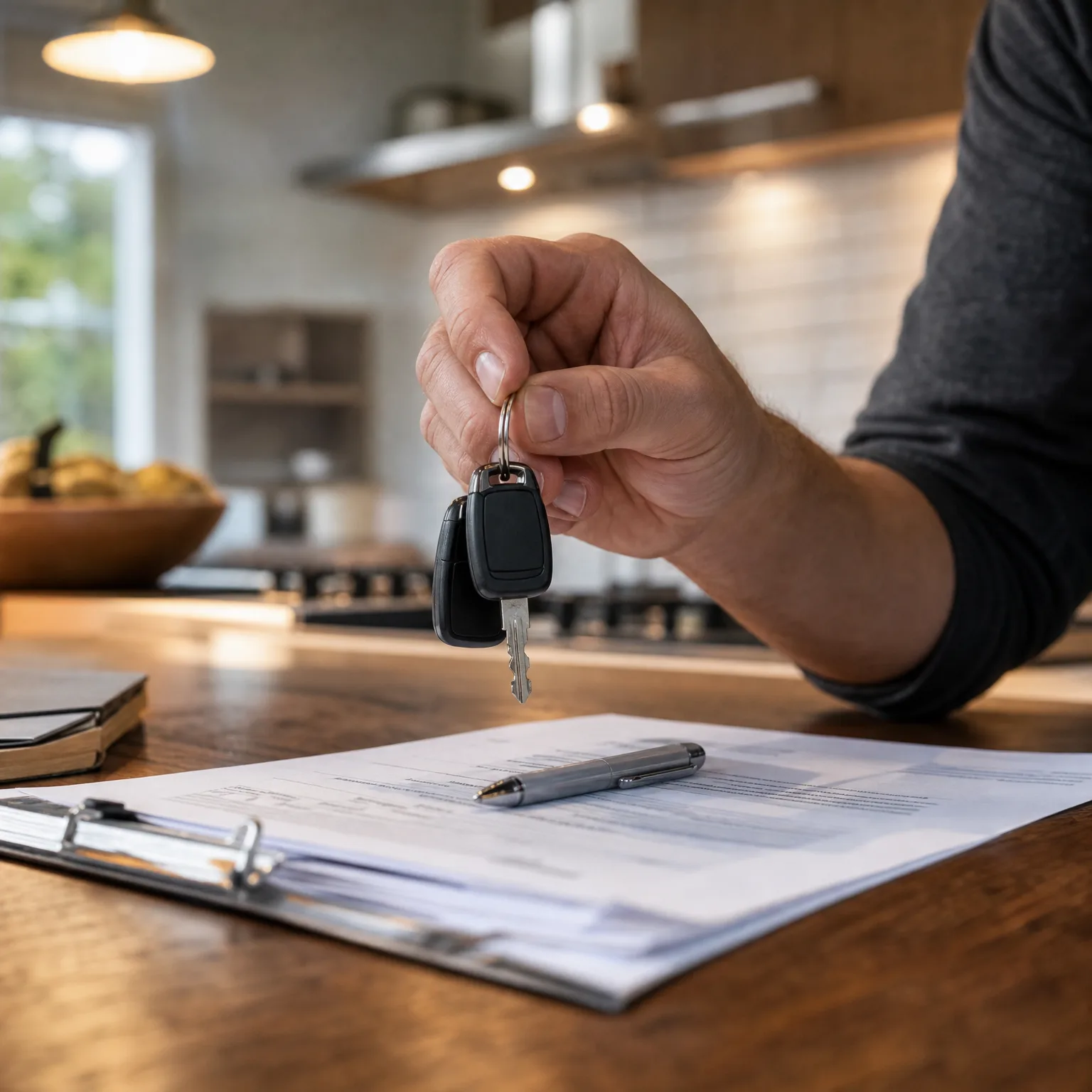

When Splitting Policies Costs More Than Keeping Them Together
Moving your vehicle to a separate policy removes the multi-car discount from both policies. The vehicle you move loses the discount immediately. The remaining vehicles on the original policy lose it too if only one car stays on that policy — the discount requires at least two vehicles. If two or more vehicles remain on the original policy, they keep the discount, but you pay the full single-vehicle rate on the policy you moved.
A household with two vehicles loses the multi-car discount entirely when the cars split onto separate policies. A household with three or more vehicles keeps the discount on the policy that retains two or more cars, but the single vehicle on the new policy pays the full rate. Whether that structure saves money depends on the size of the base-rate increase the senior driver faces versus the size of the multi-car discount the household loses.
Carriers writing Florida auto insurance — including Geico, Progressive, State Farm, Allstate, Nationwide, Travelers, and Liberty Mutual — calculate the multi-car discount as a percentage of each vehicle's base premium. The percentage varies by carrier, typically ranging from a modest reduction to a more substantial one, but the actual dollar savings depend on the base rate for each car. A smaller discount on a lower base rate can beat a larger discount on a higher one.
The comparison requires quotes from multiple carriers for both structures: all vehicles on one policy, and the senior driver's vehicle on a separate policy with the remaining vehicles together. The carrier offering the lowest combined premium for your household's specific vehicles, driving records, and garaging address wins, regardless of whether that's a single-policy or split-policy structure.
20.6%
Florida Uninsured Motorist Rate
One in five Florida drivers carries no insurance, the sixth-highest uninsured rate in the U.S. Senior drivers managing multiple vehicles should verify that uninsured motorist coverage applies to every car on the policy, not just the primary vehicle.
Insurance Research Council, 2023

Garaging Address and Household Composition Rules
The multi-car discount requires every vehicle on the policy to be garaged at the same address. A car kept at a second property — a vacation home, a college-student household member's apartment, or a business location — does not qualify for the same-policy discount unless the carrier's underwriting rules treat that address as part of the primary household. Most carriers do not.
A household member who moves out — even temporarily — and takes a vehicle with them creates the same problem. The car garaged at the new address must move to a separate policy, and the multi-car discount on the original policy disappears if only one vehicle remains. Florida seniors managing coverage for adult children, grandchildren, or other household members need to confirm the garaging address for every vehicle before renewal, because a mid-term address change can void the discount retroactively and trigger a premium adjustment.
Compare Carriers Writing Your Household's Vehicles
Florida seniors managing two or more vehicles should compare quotes from at least three carriers writing multi-car policies in the state. The carriers listed in Florida's roster — Geico, Progressive, State Farm, Allstate, Nationwide, Farmers, Travelers, Liberty Mutual, USAA, and others — all offer multi-car discounts, but the base rates and discount structures vary widely. A carrier that offers the lowest rate for a single vehicle may not offer the lowest rate for a household with three cars, and a carrier that penalizes senior drivers heavily on the primary vehicle may offset that penalty with a larger multi-car discount.
Request quotes for the same coverage limits and deductibles across all carriers. Florida requires $10,000 property damage liability and personal injury protection; many senior drivers carry higher limits to protect household assets. The multi-car discount applies after the carrier calculates the premium for your chosen coverage, so comparing identical coverage structures isolates the rate difference that matters. Use the site's comparison tool to request quotes structured for your household's specific vehicles, drivers, and garaging address.
How Carriers Re-Rate at Age 80
Some carriers increase the base rate for the vehicle the senior driver uses most frequently, while leaving the rates for other household vehicles unchanged. Other carriers apply a smaller rate adjustment across all vehicles on the policy, treating the senior driver's age as a household risk factor rather than a per-vehicle attribute. A third group of carriers re-rates only the senior driver's vehicle and adjusts the multi-car discount percentage downward, reducing the savings on every car without changing the base rates directly.
The discount applies after the base-rate calculation, so a carrier that raises your base rate significantly but keeps the discount percentage unchanged delivers a worse outcome than a carrier that raises the base rate modestly and reduces the discount slightly.
Get Your Free Quote
Get My Florida Car Insurance QuoteFrequently Asked Questions
Does the multi-car discount apply if one vehicle is driven by a senior driver and the other by a younger household member?
Yes, the multi-car discount applies to every vehicle on the same policy regardless of who drives each car. The carrier calculates a base rate for each vehicle individually based on the primary driver's age and record, then applies the multi-car discount to each vehicle's premium. A senior driver's higher base rate on one vehicle does not prevent the discount from applying to the other vehicles on the policy.
Can I keep the multi-car discount if I move one vehicle to a separate policy with the same carrier?
No. The multi-car discount requires at least two vehicles on the same policy. Moving one vehicle to a separate policy removes the discount from both policies, even if both are with the same carrier and at the same address. If two or more vehicles remain on the original policy, they keep the discount, but the vehicle on the new policy pays the full single-vehicle rate.
Does Florida require higher liability limits for senior drivers with multiple vehicles?
No. Florida's minimum liability requirements — $10,000 property damage and personal injury protection — apply to all drivers regardless of age or the number of vehicles on the policy. Senior drivers managing multiple vehicles often carry higher limits voluntarily to protect household assets, but the state does not mandate higher coverage based on age or vehicle count.
What happens to the multi-car discount when a Florida senior driver renews their license at age 80?
The multi-car discount percentage typically stays the same, but the carrier re-rates every vehicle on the policy when the primary policyholder renews at 80. The base premium for each car may increase, and the discount applies to the new higher base rate. The total premium rises even though the discount percentage is unchanged.
Can a vehicle titled to a household member on a separate policy count toward the multi-car discount?
No. The multi-car discount requires every vehicle to sit on the same policy. A vehicle titled to a household member on a separate policy does not count toward the discount, even if that person lives at the same address and insures with the same carrier.
Do all Florida carriers offer the same multi-car discount percentage?
No. Multi-car discount percentages vary by carrier, and the actual dollar savings depend on each vehicle's base premium. A smaller discount on a lower base rate can deliver better total savings than a larger discount on a higher base rate. Compare quotes from multiple carriers for your household's specific vehicles and drivers.