
Comparing Car Insurance Quotes — Florida
Free to compare
You're Comparing Quotes That Aren't Actually Comparable
You requested quotes from four carriers for your two-car household. One quote came back at one monthly figure, another significantly higher, a third somewhere in between — and when you look closer, the coverage descriptions don't match. One includes uninsured motorist coverage you didn't ask for. Another shows a higher property-damage limit than Florida's $10,000 minimum. A third bundles roadside assistance into the base quote. You cannot tell which carrier actually costs less because you are not comparing the same product.
Florida's insurance structure creates this problem more often than most states. The state requires personal injury protection on every vehicle — a coverage many states do not mandate — and does not require bodily injury liability for in-state drivers unless you are filing an FR-44 after a DUI conviction. Carriers quote different baseline packages, apply the multi-car discount differently, and structure their policies around different assumptions about what you want versus what the state requires. This article walks you through how to build a true comparison: same coverage specs across every quote, same household structure, same discount eligibility.
“A carrier with a lower base rate and smaller discount can beat a competitor with a higher base rate and larger discount for your household.”

Compare Florida Car Insurance Quotes Today
Get My Florida Car Insurance Quote$10,000
Florida Property Damage Minimum
Florida does not require bodily injury liability for standard drivers, but every registered vehicle must carry at least $10,000 property damage coverage and personal injury protection. Quotes that omit PIP or show lower property-damage limits do not meet state registration requirements.
Florida Department of Highway Safety and Motor Vehicles
Florida's PIP Requirement Changes the Baseline
Most states require bodily injury liability as the foundation of every auto policy. Florida does not — unless you are filing an FR-44 certificate after a DUI conviction. Instead, Florida mandates personal injury protection on every vehicle, covering your own medical expenses regardless of fault, and $10,000 property damage liability to cover damage you cause to someone else's vehicle or property.
This structure means every Florida quote must include PIP, and PIP pricing varies significantly by carrier, age, and county. A carrier quoting a lower base rate but higher PIP cost can end up more expensive than a competitor with a higher base rate and lower PIP pricing. When you compare quotes, confirm that every quote includes PIP at the same coverage level — typically $10,000 — and that property damage sits at the same limit across all quotes.
If you are comparing quotes for a household with an FR-44 filing requirement, the baseline changes entirely. FR-44 certificates require elevated minimums: $100,000 bodily injury per person, $300,000 per accident, and $50,000 property damage. Not every carrier writes FR-44 policies, and those that do price them differently. Confirm that every FR-44 quote you compare reflects the same elevated minimums, not Florida's standard $10,000 property-damage-only structure.
A multi-car discount applied to mismatched coverage levels tells you nothing about which carrier costs less for the coverage you actually need.



How the Multi-Car Discount Structure Varies by Carrier
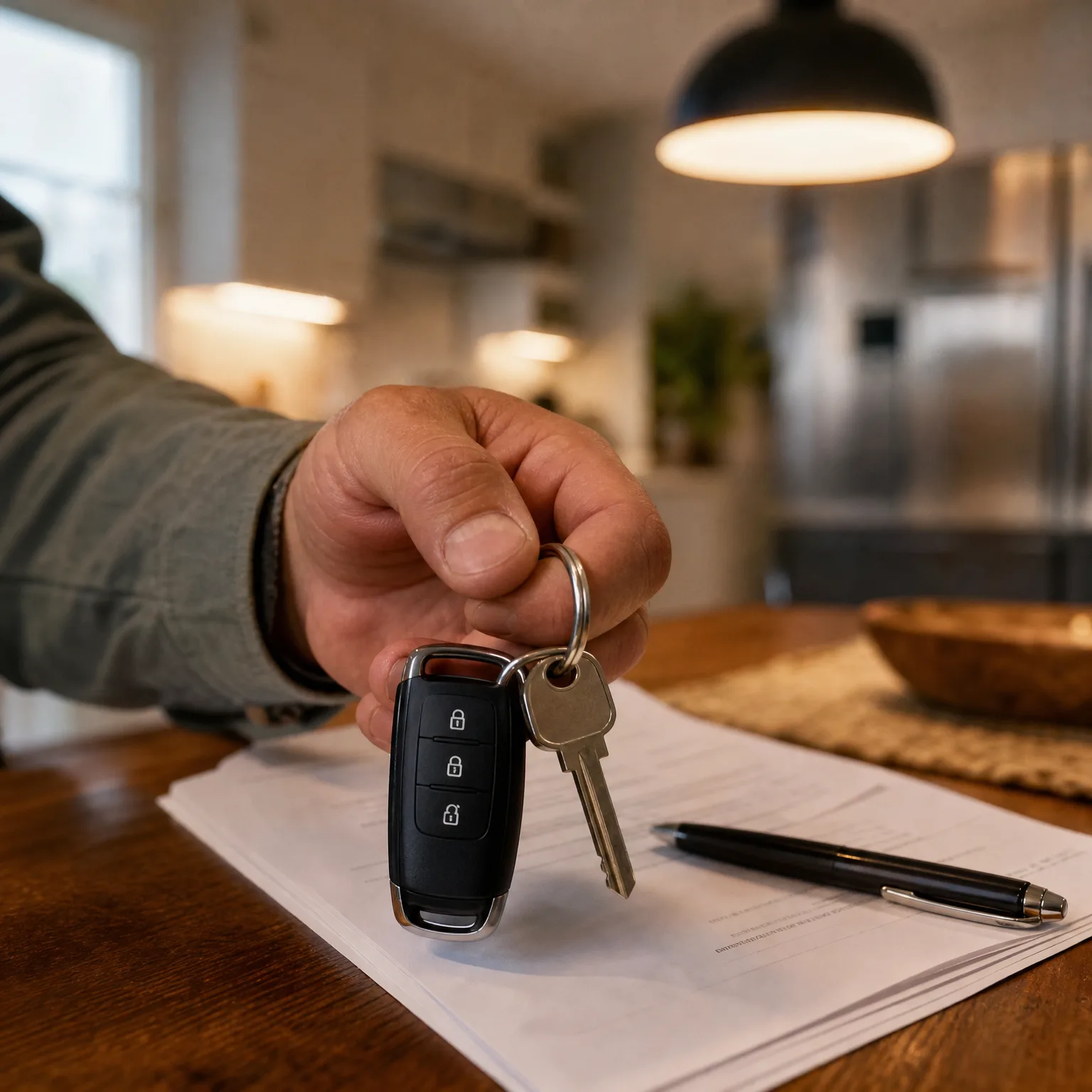
The multi-car discount is not a fixed percentage applied uniformly across all carriers. Some carriers apply a larger discount to the second vehicle and a smaller discount to the third and fourth. Others apply a flat percentage to every vehicle after the first. A few carriers reduce the per-vehicle base rate when you add a second car, which functions as a discount but does not appear as a line item on the quote.
This variation means a carrier advertising a larger multi-car discount may not produce the lowest total premium for your household. A carrier with a lower base rate and a smaller discount can beat a competitor with a higher base rate and a larger discount, depending on how many vehicles you are insuring and what coverage levels you choose. The only way to know which structure works better for your household is to compare total premiums with identical coverage specs across every vehicle.
When you receive quotes, look at the total monthly or annual premium for all vehicles combined, not the per-vehicle breakdown. Some quotes will show the discount as a separate line item; others will fold it into the per-vehicle rate. Focus on the bottom line: what you pay every month to insure every vehicle in your household at the coverage levels you specified.
20.6%
Florida Uninsured Motorist Rate
One in five Florida drivers operates without insurance. Uninsured motorist coverage is optional in Florida, but it protects you when an at-fault driver cannot pay for damage they cause. Quotes that include UM coverage will cost more; decide whether the protection justifies the added premium.
Insurance Information Institute, 2023
What to Do When Quotes Include Different Optional Coverages
Some carriers bundle optional coverages into their standard quote: uninsured motorist coverage, roadside assistance, rental reimbursement, or gap coverage. These additions raise the quoted premium, and if you are comparing a quote with bundled extras against a quote that includes only the state-required minimums, the comparison breaks down immediately.
When a quote includes coverage you did not request, ask the carrier to remove it and re-quote with only the baseline coverages you specified. If you want those optional coverages, add them to every quote so you are comparing the same package across all carriers. Uninsured motorist coverage is particularly common in Florida quotes because of the state's high uninsured-driver rate, but it is optional — you decide whether to carry it, and at what limits.
Request Quotes from Carriers That Write Multi-Vehicle Policies in Florida
Not every carrier writes multi-vehicle policies in Florida, and not every carrier that writes standard auto policies also writes FR-44 certificates if your household includes a driver with a DUI conviction. Start by identifying carriers that write the policy structure your household needs, then request quotes from that subset.
Florida carriers writing multi-vehicle policies include Geico, Progressive, State Farm, Allstate, Nationwide, and several non-standard carriers such as Acceptance Insurance, Bristol West, Dairyland, and The General. If your household includes an FR-44 requirement, confirm that the carrier writes FR-44 certificates in Florida before requesting a quote — not all standard carriers do. Carriers confirmed to write FR-44 policies in Florida include Geico, Progressive, Allstate, Acceptance Insurance, Bristol West, Infinity, Kemper, National General, and Nationwide. Request quotes from at least three carriers that write your household's policy structure, using identical coverage specs for every quote, and compare the total premium across all vehicles.
Build a Comparison Grid with Identical Coverage Specs
Write down the coverage specs you want across all vehicles: property damage at Florida's $10,000 minimum or higher, PIP at $10,000, and whether you want to add bodily injury liability even though Florida does not require it for standard drivers. If you want uninsured motorist coverage, collision, or comprehensive, specify the same limits and deductibles for every quote. Carriers will try to upsell you on higher limits or additional coverages — that is fine, but get the baseline quote first with identical specs so you can compare apples to apples.
When you request quotes, specify that you are insuring multiple vehicles on one policy and ask for the multi-car discount to be applied. The discount typically requires every vehicle to sit on the same policy, and most carriers also require the vehicles to be garaged at the same address. If your household includes a vehicle titled to someone outside the household or garaged at a different address, confirm with each carrier whether that vehicle qualifies for the same-policy discount. Some carriers exclude it; others allow it with documentation.
Get Your Free Quote
Get My Florida Car Insurance QuoteFrequently Asked Questions
What coverage does Florida require on every vehicle?
Florida requires $10,000 property damage liability and personal injury protection on every registered vehicle. The state does not require bodily injury liability for standard drivers, but FR-44 filers after a DUI must carry elevated minimums: $100,000 bodily injury per person, $300,000 per accident, and $50,000 property damage.
How do I know if a multi-car discount is applied to my quote?
Some carriers show the multi-car discount as a separate line item on the quote; others fold it into the per-vehicle rate. Ask the carrier to confirm that the discount is applied and how it affects the total premium for all vehicles on the policy.
Can I compare quotes if one includes uninsured motorist coverage and another does not?
No. Uninsured motorist coverage is optional in Florida, and including it in one quote but not another makes the comparison invalid. Either add UM coverage to every quote or remove it from every quote so you are comparing identical coverage structures.
Do all Florida carriers write multi-vehicle policies?
Most standard and non-standard carriers write multi-vehicle policies in Florida, but not all carriers write FR-44 certificates if your household includes a DUI conviction. Confirm that the carrier writes the policy structure your household needs before requesting a quote.
What is the fastest way to compare quotes from multiple carriers?
Define the exact coverage specs you need — property damage limit, PIP, optional coverages, and deductibles — then request that identical structure from every carrier. Compare the total monthly or annual premium for all vehicles combined, not the per-vehicle breakdown.
Does adding a third vehicle change the multi-car discount?
Some carriers apply a larger discount to the second vehicle and a smaller discount to the third and fourth. Others apply a flat percentage to every vehicle after the first. The only way to know how the discount scales for your household is to request a quote with all vehicles included.